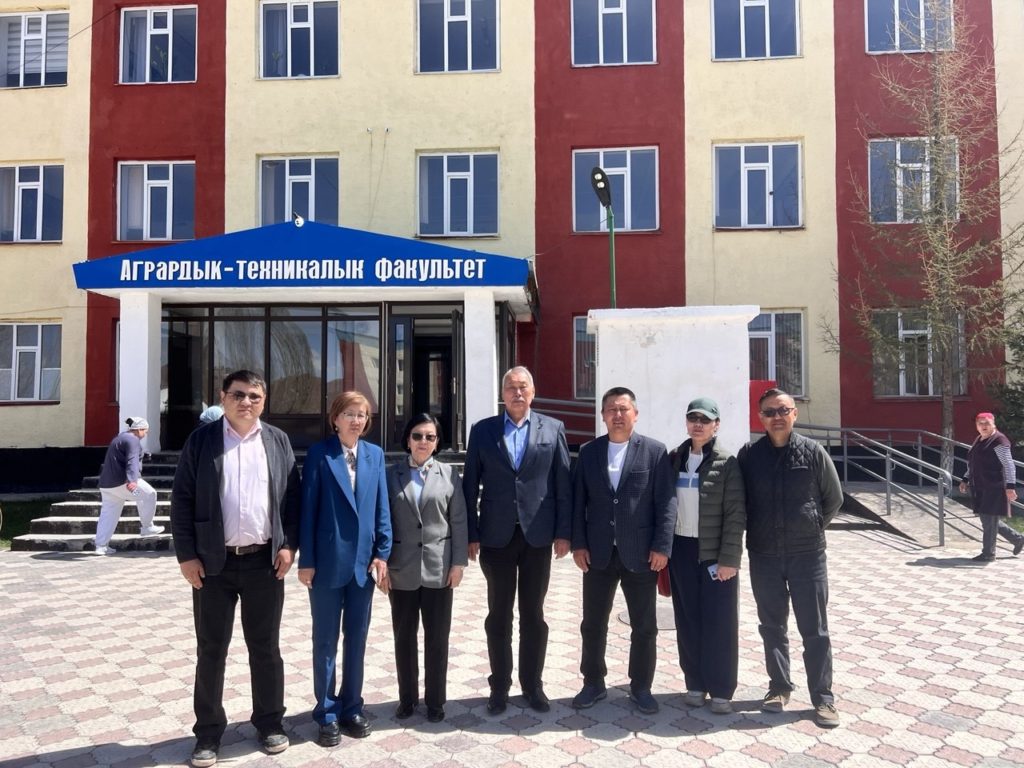
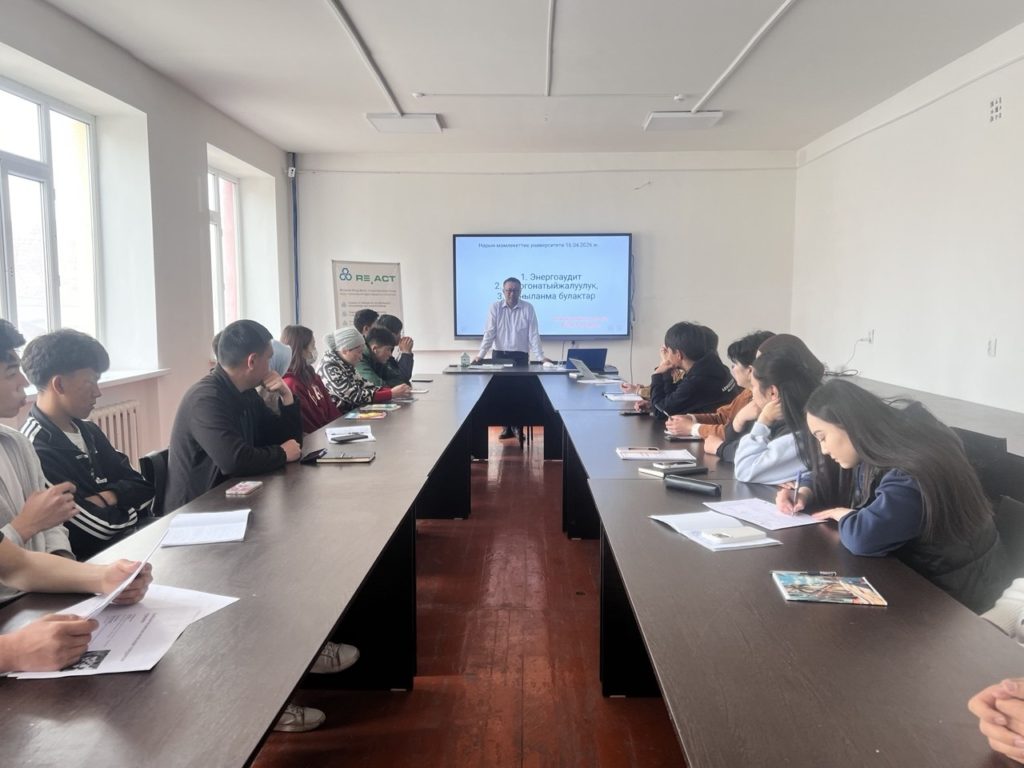
15−16-апреля 2025 года на аграрно-техническом факультете Нарынского института КНУ в рамках проекта «RE.Act» (https://water-energy-nexus.org) были проведены гостевые лекции профессора кафедры возобновляемых источников энергии КГТУ им. И. Раззакова, доктора технических наук, члена-корреспондента НАН КР, эксперта в области возобновляемых источников энергии Обозова Алайбека Джумабековича и инженера-энергетика ПЭС-Нарын Айбека Аскарбекова.
Темы лекции были посвящены на потенциал и использованию возобновляемых источников энергии в Кыргызстане для формирования низкоуглеродной инфраструктуры.
В ходе лекции были рассмотрены актуальные вопросы развития и внедрения возобновляемых источников энергии, их роль в снижении углеродного следа, а также перспективы формирования устойчивой энергетической инфраструктуры. Особое внимание было уделено вопросам интеграции ВИЭ в существующую энергосистему. В ходе лекции были приведены практические примеры внедрённых объектов ВИЭ в Кыргызстан, что позволило наглядно продемонстрировать эффективность и перспективность использования возобновляемых источников энергии в условиях республики.
Лекции вызывали значительный интерес у студентов и преподавателей Нарынского института и Нарынского аграрно-технико-экономического колледжа КНУ, сопровождалась активным обсуждением и обменом мнениями. Особый интерес у слушателей вызвал использование биогазовой установки в Нарынской области.
Guest lectures as part of the RE. Act project
On 15−16 April 2025, guest lectures were held at the Faculty of Agricultural Engineering of the Naryn Institute of the Kyrgyz National University in frame of the ‘RE.Act' project (https://water-energy-nexus.org).
The speakers were Professor Alaybek Obozov, Head of the Department of Renewable Energy Sources at the Razzakov Kyrgyz State Technical University, Doctor of Technical Sciences and Corresponding Member of the National Academy of Sciences of the Kyrgyz Republic, expert in the field of renewable energy sources, and Aibek Askarbekov, a power engineer at PES-Naryn.
The lectures focused on the potential and use of renewable energy sources in Kyrgyzstan for the development of a low-carbon infrastructure.
The lecture addressed current issues regarding the development and implementation of renewable energy sources, their role in reducing the carbon footprint, and the prospects for establishing a sustainable energy infrastructure. Particular attention was paid to the integration of renewable energy sources into the existing power system.
Practical examples of renewable energy projects implemented in Kyrgyzstan were presented during the lecture, clearly demonstrating the effectiveness and potential of using renewable energy sources in the country.
The lectures generated considerable interest among students and lecturers at the Naryn Institute and the Naryn Agricultural, Technical and Economic College of the Kyrgyz National University, and were accompanied by lively discussion and an exchange of views.
The use of a biogas plants in the Naryn region was of particular interest to the audience.